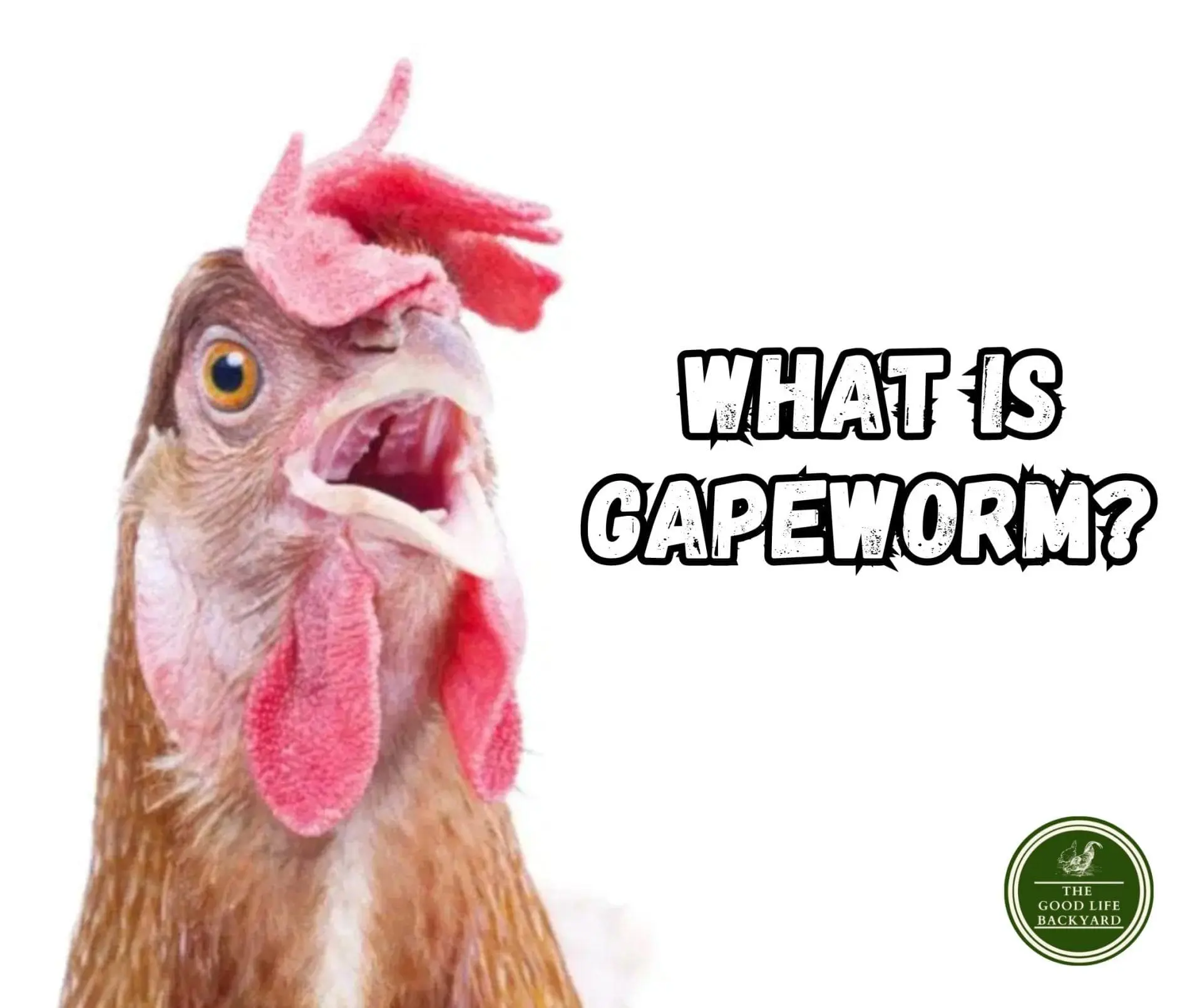
Gapeworm is a parasite that inhabits the flesh of a bird’s throat, leading to intermittent wheezing and gasping. Often mistaken for a respiratory infection, gapeworm requires specific treatment as antibiotics are ineffective against this parasite.
Identifying Gapeworm
The first signs of gapeworm in chickens are typically alarming and can easily be confused with other respiratory issues. Key symptoms to look for include:
- Gaping and Gasping: Chickens will often breathe with their mouths open, extending their necks upwards as they gasp for air.
- Hissing Sound: As they struggle to breathe, you may hear a distinctive hissing sound.
- Lethargy and Reduced Appetite: Affected birds may appear lethargic and show a decrease in appetite.
Healthy adult chickens can usually handle a certain level of internal parasites without their health being noticeably affected. However, noticeable symptoms indicate a serious infestation requiring immediate action.
The Life Cycle and Spread of Gapeworm
Gapeworms can become so numerous that they block the throat of an affected bird, hindering the passage of food, water, and eventually air, which can lead to death. The life cycle of gapeworm involves:
- Egg Ingestion: Chickens pick up eggs from the ground or from intermediate hosts such as earthworms, slugs, or snails.
- Maturation: Once inside the bird, male and female gapeworms embed themselves in the throat, where they live joined together, feeding off the bird.
- Egg Production: They produce eggs that are either passed through the bird’s digestive system or coughed out.
- Infection Cycle: These eggs are then ingested by intermediate hosts, perpetuating the cycle when these hosts are eaten by other birds.
Treating Gapeworm
If one bird in your flock is showing signs of gapeworm infestation, it’s likely that the entire flock is at risk. Here’s what you need to do:
- Select the Right Dewormer: Not all avian dewormers treat gapeworm, so choose carefully. We recommend Avitrol Plus Tablets, known for their effectiveness against a broad range of internal parasites, including gapeworm.
- Follow Treatment Instructions: Treat all birds in the flock as per the instructions on the dewormer. Typically, a follow-up treatment is necessary around two weeks after the initial dose to ensure all parasites are eradicated.
Preventing Future Infestations
Preventative measures are crucial in managing gapeworm in your flock:
- Regular Deworming: Implement a regular deworming schedule to keep parasite levels low.
- Clean Environment: Maintain clean living conditions for your chickens to minimise exposure to parasite eggs.
- Monitor Intermediate Hosts: Reduce the presence of earthworms, slugs, and snails in your chickens’ environment, as these can harbour gapeworm eggs.
Managing gapeworm in your flock involves vigilant observation, timely treatment, and preventive care. By understanding the signs and lifecycle of gapeworm, you can take effective steps to protect your chickens from this harmful parasite. For further reading on respiratory illnesses that can mimic gapeworm symptoms, click here.
By staying informed and proactive, you can ensure the health and well-being of your flock, keeping gapeworm at bay and maintaining a happy, thriving backyard chicken environment.


