What Can Chickens Eat? Safe Foods for Chickens
Chickens are natural foragers and enjoy a wide variety of foods. Offering healthy treats can provide enrichment and extra nutrients, but treats should only make up a small part of their diet.
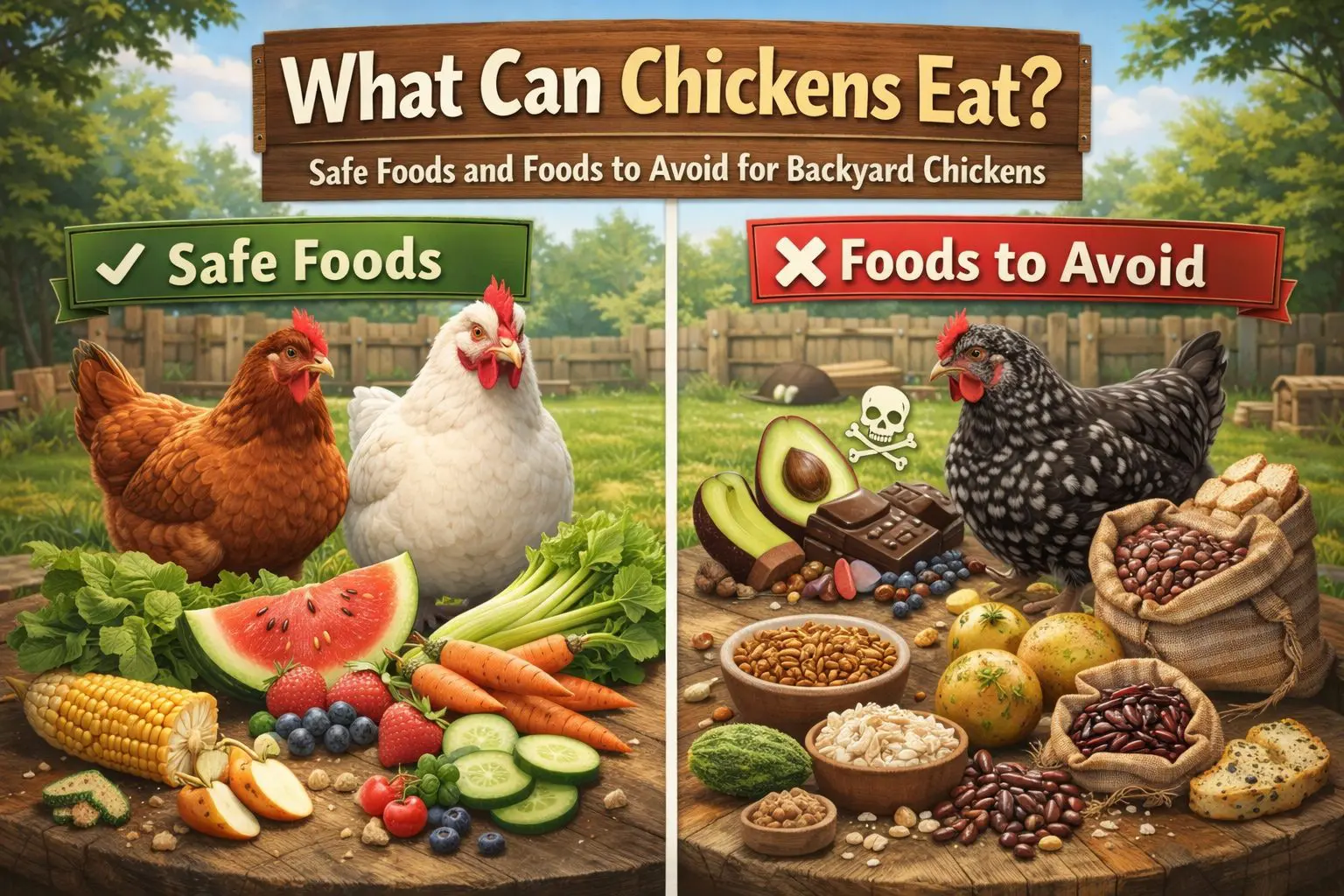
Some safe foods chickens can eat include:
– Vegetables
– Pumpkin
– Cucumber
– Zucchini
– Carrots
– Leafy greens such as lettuce, kale, and silverbeet
– Fruits
– Apples (without seeds)
– Watermelon
– Berries
– Bananas
– Grapes (cut for smaller birds)
– Protein Treats
– Mealworms
– Black soldier fly larvae
– Cooked eggs
– Small amounts of plain cooked meat or fish
– Grains and Extras
– Cooked rice
– Oats
– Corn
– Bread in small amounts
Introducing a variety of safe foods can help keep chickens active and engaged while supporting their overall health.
What Foods Should Chickens Not Eat?
Although chickens can eat many foods, some should be avoided as they may be harmful.
Foods that chickens should not eat include:
– Avocado
– Chocolate
– Raw potato peel or green potatoes
– Raw dried beans
– Mouldy or spoiled food
– Salty or heavily processed foods
– Avoid feeding large amounts of sugary or processed foods, as these can disrupt a chicken’s balanced diet.
How Much Should Chickens Eat?
A helpful rule is the 90/10 rule for chicken feeding:
– 90% balanced poultry feed
– 10% treats and extras
Keeping treats limited ensures your chickens receive the nutrition they need for healthy feathers, strong eggshells, and consistent egg production.
Providing the right feed is one of the most important parts of keeping healthy backyard chickens. When chickens receive balanced nutrition appropriate for their age and stage of life, they are more likely to thrive, lay well, and maintain good overall condition.
Frequently Asked Questions About Feeding Chickens:
What do chickens eat every day?
Chickens should eat a balanced commercial poultry feed as their main diet. This feed is specially formulated to provide the correct levels of protein, vitamins, minerals, and energy.
Most backyard chickens will eat around 120–150 grams of feed per day, depending on their size, breed, and whether they are laying eggs.
Fresh water should always be available.
Can chickens eat kitchen scraps?
Yes, chickens can enjoy many kitchen scraps such as vegetable peelings, leafy greens, cooked rice, and fruit. These can provide enrichment and variety for your flock.
However, scraps should only make up a small portion of their diet. A balanced poultry feed should still provide most of their daily nutrition.
Can chickens eat bread?
Chickens can eat small amounts of bread as an occasional treat, but it should not be fed regularly. Bread has little nutritional value and too much can fill chickens up without providing the nutrients they need.
Can chickens eat rice?
Yes, chickens can eat both cooked and uncooked rice. Rice can be offered as an occasional treat, but it should not replace a balanced poultry feed.
Can chickens eat fruit?
Many fruits are safe and enjoyable for chickens, including apples (without seeds), watermelon, berries, bananas, and grapes.
Fruit should be fed in moderation because it contains natural sugars.
How often should chickens be fed?
Most chicken keepers provide free access to feed throughout the day, allowing chickens to eat when they need it.
If feeding scraps or treats, it is best to offer them later in the day after chickens have eaten their regular feed, ensuring they first consume the balanced nutrition they need.
Do chickens need grit?
Yes, chickens need grit to help grind food in their gizzard, especially if they eat grains, seeds, or kitchen scraps.
If chickens do not have access to natural stones or soil, providing poultry grit can help support healthy digestion.
Do chickens need calcium?
Laying hens need extra calcium to produce strong eggshells. Most layer feeds already contain calcium, but many keepers also provide shell grit or crushed oyster shell separately, allowing hens to consume additional calcium when needed.