Setting up a brooder for your next hatch? One of the first decisions is how you’ll keep your chicks warm.
A brooder heat plate and a heat lamp can both provide warmth, but they work differently. The best choice depends on how many chicks you’re raising, the space available and how cold your brooder location becomes overnight.
Here’s how to compare the options and choose a setup that suits your flock.
How Does a Brooder Heat Plate Work?
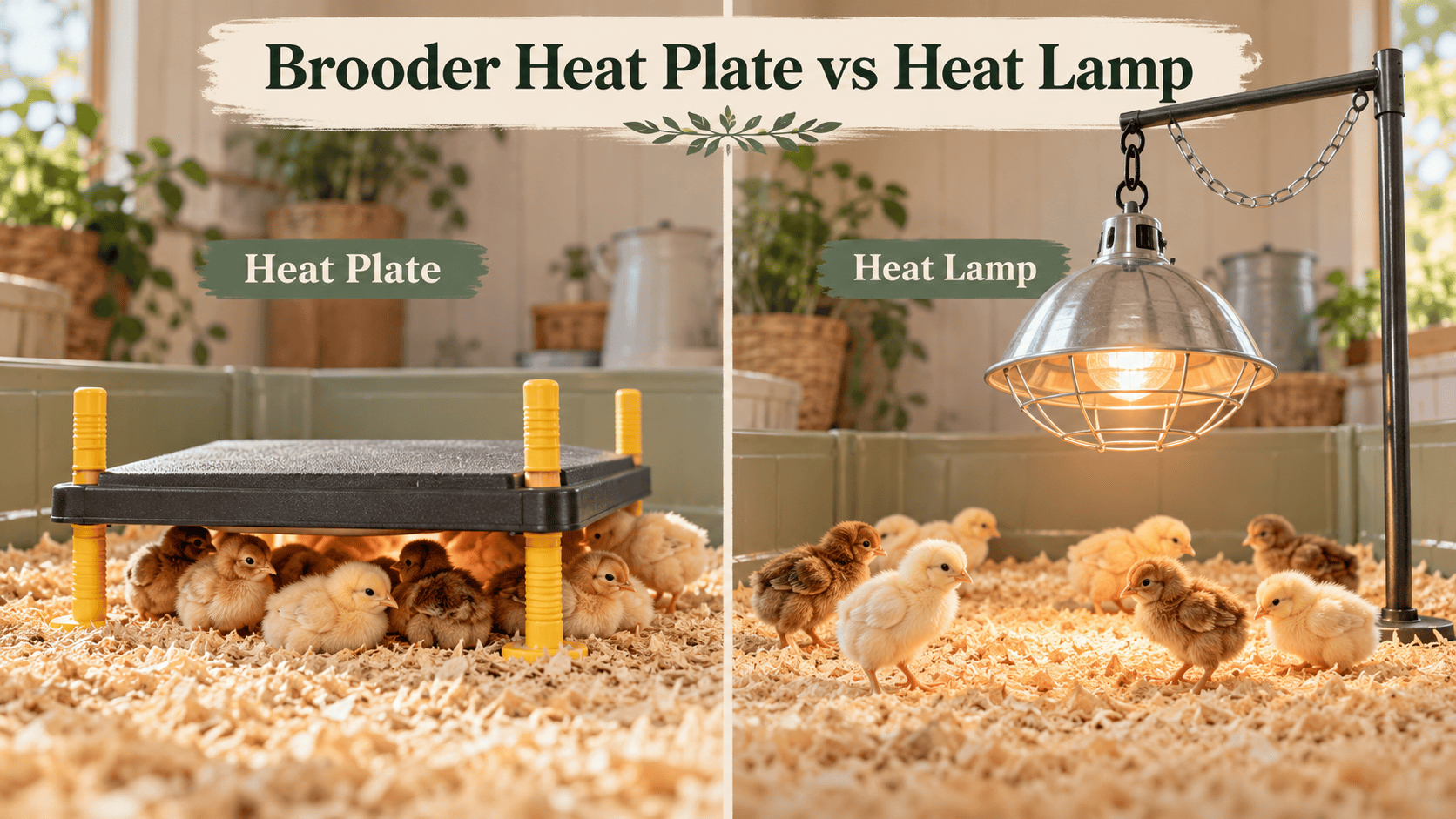
A brooder heat plate has a heated underside supported by adjustable legs. Chicks shelter underneath when they need warmth, then come out to eat, drink and explore.
Rather than warming the whole enclosure, the plate gives chicks a warm resting place. It provides heat without bright light, allowing a normal day-and-night routine.
As your chicks grow, you raise the plate to suit their height. You’ll also need to check that every chick can fit comfortably underneath, especially as a small group of fluffy hatchlings becomes a group of much larger youngsters.
Our range includes TGLB Chick Heating Plates and Olba Comfort Brooder Heat Plates in several sizes.
How Does a Chick Heat Lamp Work?
A heat lamp directs warmth into the brooder from above. The lamp, fitting, mounting height and enclosure all affect the heated area.
Not every heat source produces light. Some bulbs provide both warmth and visible light, while a ceramic infrared heat emitter provides heat without illumination.
Always match the heat source to a suitable fitting. Check the maximum wattage, mounting instructions and required clearance from bedding and other materials before switching it on.
Brooder Heat Plate vs Heat Lamp: A Quick Comparison
How They Provide Warmth
A brooder heat plate gives chicks a warm place to shelter beneath its heated underside. Every chick needs enough room to fit underneath comfortably.
A heat lamp directs warmth from above. The heated area depends on the bulb, mounting height and brooder setup. There must be enough warm space for all your chicks, plus cooler space where they can move away.
Light and Overnight Use
A brooder heat plate provides warmth without bright light.
With a heat lamp, the light depends on your chosen heat source. Some bulbs produce both heat and visible light, while ceramic heat emitters provide warmth without illumination.
Adjusting Your Setup
Raise a heating plate as your chicks grow, following the supplied instructions. Check regularly that they can enter, rest underneath and leave freely.
For a heat lamp, follow the manufacturer’s mounting and clearance requirements when adjusting the setup. Keep hot components away from bedding and other combustible materials.
Running Costs
Running costs depend on the equipment’s wattage, operating time and your electricity rate. Compare the actual specifications of the products you’re considering.
Safety and Brooder Conditions
For a heating plate, check its capacity, height settings and permitted room temperature.
For a heat lamp, check bulb compatibility, secure mounting and clearance from surrounding materials.
Both options need regular checks and must be used according to their instructions.
Which Costs Less to Run?
Compare the actual wattage of the products you’re considering. A lower-wattage appliance uses less electricity over the same operating time, but it must still provide enough warmth for your chicks.
You can calculate the cost using:
Watts ÷ 1,000 × hours used × electricity price per kWh = running cost
For the examples below, we have assumed continuous operation for 24 hours a day, with electricity costing 35 cents per kWh.
A 20-Watt Heating Appliance
Uses approximately 0.48 kWh per day.
Estimated cost: 17 cents per day, or $5.04 over 30 days.
A 40-Watt Heating Appliance
Uses approximately 0.96 kWh per day.
Estimated cost: 34 cents per day, or $10.08 over 30 days.
A 100-Watt Heating Appliance
Uses approximately 2.4 kWh per day.
Estimated cost: 84 cents per day, or $25.20 over 30 days.
A 150-Watt Heating Appliance
Uses approximately 3.6 kWh per day.
Estimated cost: $1.26 per day, or $37.80 over 30 days.
These are illustrative wattages, not specifications for particular products. Actual costs depend on your electricity tariff, appliance rating and any controls that cycle or reduce the power.
Choose equipment that suits your brooder conditions first, then compare its running costs.
These are illustrative wattages, not specifications for particular products. Actual costs depend on your electricity tariff, appliance rating and any controls that cycle or reduce the power.
Choose equipment that suits your brooder conditions first, then compare its running costs.
Are Brooder Heat Plates Safer Than Heat Lamps?
A heat plate avoids the exposed hot bulb associated with a traditional lamp. However, it remains an electrical heating appliance and must be used correctly.
For a heat plate, follow the supplied instructions for assembly, height, positioning and cleaning. Keep it dry, protect the cord and discontinue use if it becomes damaged. The Comfort plate manual specifically requires a dry environment and secure installation of its legs.
For a heat lamp:
– Use a fitting rated for your chosen bulb or emitter
– Follow the specified mounting and clearance requirements
– Secure it so chicks, pets or people cannot easily dislodge it
– Keep hot components clear of bedding, plastic and other combustible materials
– Inspect the equipment regularly
– A ceramic emitter does not glow, but it still becomes hot. Treat it with the same care you would any other high-temperature heat source.
What Size Brooder Heat Plate Do You Need?
Start with the manufacturer’s recommended capacity, then consider your chicks’ breed, age and growth.
A capacity quoted for newly hatched chicks does not mean the same number of older birds will fit comfortably beneath the plate.
Before buying, ask:
Can all the chicks shelter underneath together?
Will there still be enough space as they grow?
Are you raising larger breeds?
Does the brooder have room for the plate, feed, water and an unheated area?
Our TGLB Chick Heating Plates come in 25 × 25 cm and 35 × 35 cm sizes. The Olba Comfort range includes 25 cm, 30 cm and 40 cm options. Check the individual listings when comparing dimensions and capacity.
Can You Use a Brooder Heat Plate in a Cold Shed?
Check your particular model’s instructions before choosing a shed or other unheated location.
Heat plates have operating limits, and minimum room-temperature requirements vary between products. A recommendation for one brand should not be applied to another.
For example, Brinsea specifies indoor use and a minimum ambient temperature of 10°C for its EcoGlow brooders. That is a requirement for those models, rather than a general rule for every heating plate.
Measure conditions where the brooder will actually sit, including overnight. If temperatures fall outside your equipment’s operating requirements, choose a more suitable location or an appropriately designed heating setup.
How Do You Know Your Chicks Are Warm Enough?
Watch how your chicks use the brooder, especially after arrival and during cooler periods.
With a correctly adjusted Comfort plate, chicks should settle calmly underneath and come out to eat and drink. Persistent loud cheeping, restless huddling or reluctance to leave the plate can indicate that the height or heating conditions need attention. Chicks struggling to enter may need more clearance.
Check the equipment, available space and surrounding conditions rather than relying on one sign alone. Persistent distress can also have causes other than temperature.
Practical tip: Set up and test your brooder before your chicks arrive. Making adjustments is much easier before you have a box of hatchlings waiting for warmth
Which Heating Option Should You Choose?
A brooder heat plate is worth considering if you want a sheltered resting area without constant light, have enough room for every chick beneath it and can meet the model’s operating requirements.
A heat lamp may suit a setup designed around overhead heating, provided you can mount it securely and maintain the required clearances. If you want warmth without illumination, compare compatible ceramic heat emitters.
The right choice is the one that provides suitable warmth in your actual brooder conditions, with enough space for chicks to move comfortably.
Browse our brooder heat plates, chick heat lamps and heating accessories, or contact The Good Life Backyard with your chick numbers and brooder details for help comparing the options.=Breeding chicks is an incredibly rewarding experience, offering the chance to watch new life emerge and grow under your care. However, it’s also a process that requires careful planning and preparation to ensure success.
Learning Centre
Expert tips and tricks for backyard chicken keeping
Brooder Heat Plate vs Heat Lamp: Which Is Best for Your Chicks?
Join the Flockers

Top rated products
-
 Buffered Iodine Spray 500ml $44.99
- Coopex Sachet 25g $14.99
- Inca Sulfa 3 $29.95
- Vetsense Avi-Calcium Original price was: $19.99.$17.99Current price is: $17.99.
- Vetsense Avi-Lyte 125ml $17.99
- Avitrol Plus Wormer Syrup Price range: $15.99 through $39.99 — or subscribe and save up to 10%
- Vetsense Avi-Vital 125ml $17.99
- Malaban Wash Price range: $34.99 through $58.99